How Microbes and Sugar Sources Shape Exopolysaccharides
Andrea Fuso examines how bacterial strain and sugar source affect the amount and molecular composition of exopolysaccharides produced by lactic acid bacteria.
Hyaluronic Acid Aerogels for Wound Dressings and Drug Release
Daniel Aguilera investigates how to prepare porous hyaluronic acid aerogels and how processing conditions affect their density and surface area.
Producing Chitin Nanofibres from Insect By-Products
Eva Pasquier compares chitin nanofibres from fly larvae and shrimp shells, exploring whether insect-derived chitin could provide a useful alternative source for materials development.
Tuning Chitosan Particle Deformability for Nanomedicine
Fannie Le Floch explores how changing chitosan cross-linking can tune the stiffness of drug-carrying particles and influence their performance in cells.
Chitosan-Coated Niosomes for Nose-to-Brain Drug Delivery
Giulia Nerli investigates chitosan-coated niosomes as a potential nasal delivery system for clonazepam, assessing formulation, stability and permeability.
Alginate Beads for Intestinal Delivery of Serenoa repens Oil
Ilaria Arduino explores alginate beads made by prilling as a way to encapsulate Serenoa repens oil for potential intestinal delivery.
How Plant Fibre Source Affects Flow and Oil-Holding Properties
Panagiota Mouraka compares fibres from wheat, oat, citrus, apple and pea to examine how botanical source and structure affect their behaviour in oil-based food systems.
Potato Peel Waxes Improve Thermoplastic Starch for 3D Printing
Paulo Brites explores how potato peel waxes affect the processing and performance of thermoplastic starch, including its use in extruded 3D-printing filaments.
Coffee-Derived Polysaccharides as Carriers for Pulmonary Insulin Delivery
Sara Valente investigates whether galactomannans and arabinogalactans recovered from coffee can protect insulin and support its delivery through the lungs.
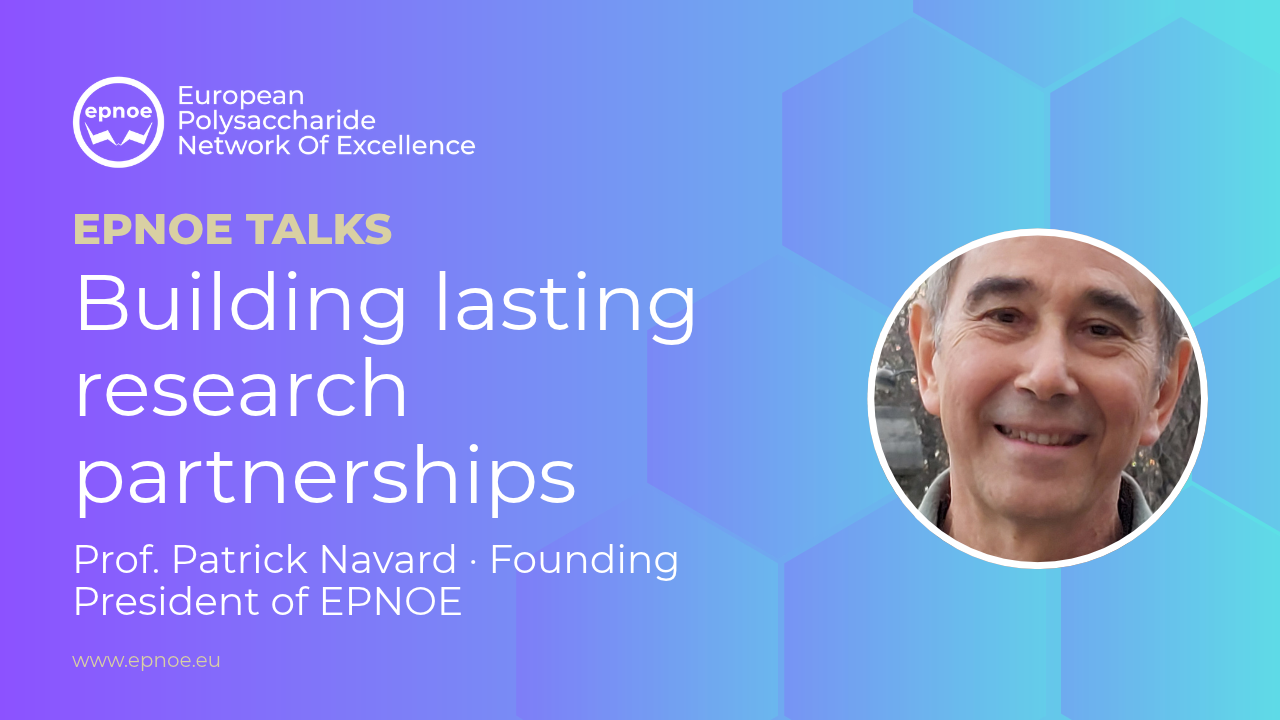
Why EPNOE was founded and how research partnerships last
EPNOE’s founding president, Prof. Patrick Navard, recounts why the network was created and shares his perspective on building research collaborations that endure.