
From Forest Side Streams to Bioproducts
Jaakko Pajunen of Boreal Bioproducts presents approaches to turning forest side streams into higher-value products.
Hybrid Polysaccharide Hydrogels for Cell Culture Platforms
Roberta Teixeira Polez explores hybrid polysaccharide hydrogels as materials for cell culture platforms.
Polysaccharide-Based Materials for Human Health Applications
Prof. Pedro Fardim surveys the potential of polysaccharide-based materials in applications related to human health.
Self-Healing Conductive Hydrogels for Wearable Sensors
Xiaoyan Qing presents transparent ionic conductive hydrogels designed with self-healing and multi-sensing capabilities for wearable sensor applications.
Alginate and Pectin Gels: Fine Structure and Solvent Interactions
Prof. Anna Ström examines how the fine structure of alginate and pectin gels relates to their interactions with solvents.
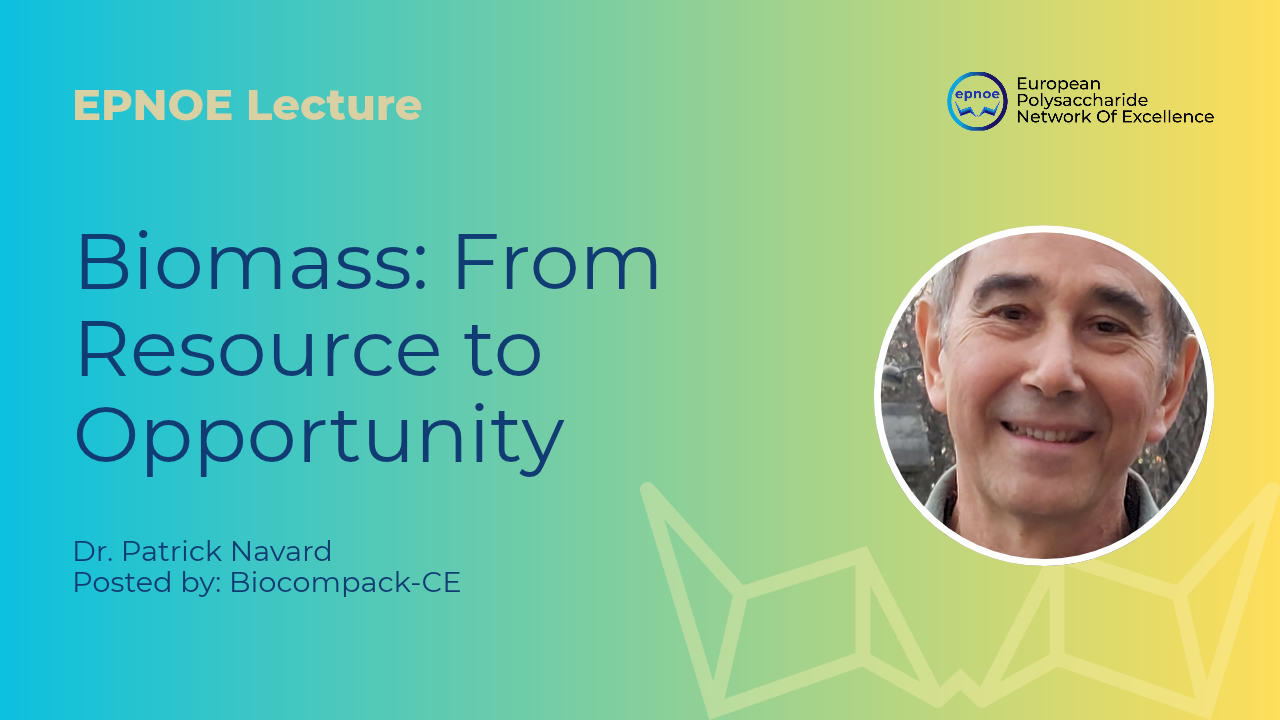
Biomass for the Future: A Project Overview
Prof. Patrick Navard introduces the Biomass for the Future project in this lecture shared by an EPNOE institutional member.
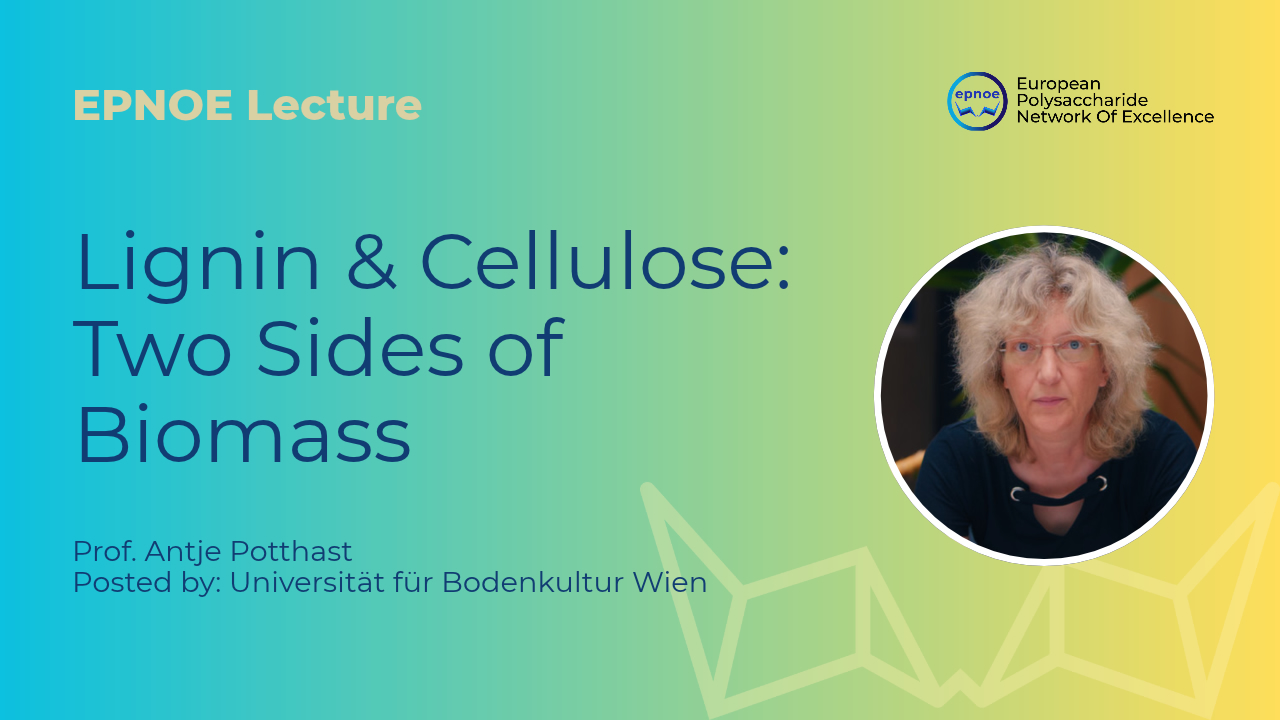
Lignins and Celluloses: Two Perspectives on Renewable Chemistry
This lecture from the University of Natural Resources and Life Sciences, Vienna, explores lignin and cellulose, two major components of renewable biomass, and their place in renewable chemistry.
Tuning Water Uptake in Cellulose–CMC Hydrogel Beads
Pieter De Wever examines how adding carboxymethyl cellulose changes swelling, porosity and water mobility in cellulose-based hydrogel beads.

Observing Cellulose–Sulfuric Acid Crystals During Swelling
Understanding how cellulose responds to chemical treatment can help researchers interpret changes in its structure and guide material processing. Wei Li of Université Grenoble Alpes studied flax fibres as they swelled in sulfuric acid at different concentrations and temperatures.
X-ray diffraction revealed new crystalline reflections under certain conditions. These reflections disappeared or persisted differently as samples warmed, while cellulose regenerated after washing in cold water was amorphous.
Aqueous Chemical Modification of Wet Cellulose Fibres
Marco Beaumont presents an aqueous method for modifying never-dried cellulose fibres, offering a way to produce cellulose nanofibres with different surface properties.